
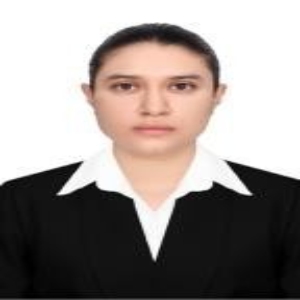
Katy A. Solis Sanchez
National Medical Center November 20th, MexicoPresentation Title:
Management of refractory pulmonary hemorrhage with Eptacog alfa, aminocaproic acid and tranexamic acid in the neonatal intensive care unit
Abstract
Objective: The objective of the study is review the survival of neonates with refractory Pulmonary hemorrhage (PH) treated with antihemorrhagic drugs (tranexamic acid, alpha eptacog and aminocaproic acid).
Methods and materials: Study of concurrent retrospective cohorts. From January 1, 2020 to May 31, 2024, we reviewed the clinical evolution of neonates treated in the Neonatal Intensive Care Unit (NICU) for PH refractory to conventional management, who were administered one or two of the following antihemorrhagic drugs: tranexamic acid, eptacog alfa, and aminocaproic acid. Success was determined as survival with data on hemorrhage control (reduction in the requirement for transfusions) and recovery of hemoglobin levels. The data collected were analyzed with the SPSS version 22 ® and Prims version 10 ® program. The pre- and post-treatment comparisons were analyzed with Wilcoxon's signed rank test and for the comparison between groups, the Kruskall Wallis test or Fisher's Exact test was used according to the type of variables. A level of statistical significance with an alpha of less than 0.05 was considered.
Results: Refractory PH was documented in 43 neonates, 27 males (62.8%). 86% were preterm. A drug was administered to 35 (81%) (tranexamic acid = 8, eptacog alfa = 19, aminocaproic acid = 8) and in eight (18.6%) two of the drugs. Treatment was successful in 34 patients (79%, 95% CI 70-90), with survival and lower transfusion requirements, although mild anemia was found in eight (18.6%) and mild thrombocytopenia was found in five (11.6%).
Conclusions: This study identified significant efficacy and improvement in patients managed with traditional therapy of a PH refractory to conventional treatment. As well as a decrease in the administration of blood components (plasma, erythrocyte concentrate, platelet apheresis) and absence of significant side effects associated with the drugs used.
Biography
Katy Solis, a pediatrician graduated from the “Hospital Español” in 2025, certified by the Mexican Council for Pediatrics Certification (CMCP), has been published in the Mexican Journal of Pediatrics. Winner of the 2023 Resident Program of the Reckitt Pediatric Global Resident Scholarship Program, held at Boston Children's Hospital. Assistant and speaker at the OMI MEX CHOP 2024 Seminar in Pediatric Hematology and Oncology.
She is now working as a Resident of Pediatric Hematology at the “CMN 20 de Noviembre” in Mexico City, endorsed by the Universidad Nacional Autónoma de Mexico (UNAM), she completed rotation in the Coagulopathy and Hemotherapy Unit, “Hospital Universitario, La Paz”, Madrid as a complementary part of her training.

Organization Location
1309 Coffeen Avenue, STE 1200, Sheridan, Wyoming 82801, USA
General Enquiry
contact@scientexconferences.com
Finance Enquiry
finance@scientexconferences.com
Call us at
USA : (+1) 831 607 4767